
Cidade de Faro Portugal
- Viver de Viagem
- Jan 3
- 12 min read

Updated: Jan 4

Faro, Portugal, is the capital of the Algarve and, unlike its neighbors Albufeira or Lagos, preserves a more local and traditional pace of life. It's a city where medieval walls guard centuries of history, while the Ria Formosa offers one of the most stunning natural landscapes in the country.

🏛 What to Visit: Itinerary through the Historic Center
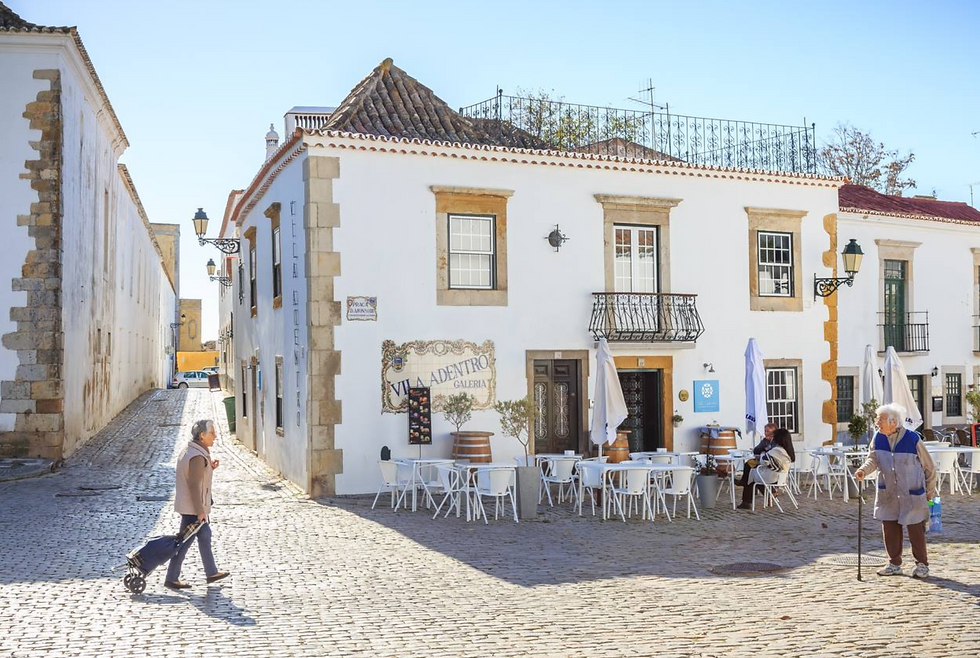
The best way to explore Faro is on foot, starting with Vila Adentro (the old town), which is located within the ancient walls.
The Arco da Vila is one of Faro's monumental gates and serves as the main entrance to the city's historic area, known as Vila Adentro. It is considered one of the most remarkable examples of neoclassical architecture in the Algarve and is famous for the storks that frequently nest atop its towers.
Important Information
Location: Rua da Misericórdia 8, Faro (next to the Dock and Manuel Bívar Garden).
Opening Hours: The arch is a public monument and is accessible 24 hours a day.
Price: Passage through the arch is free. Inside, there is occasionally an interpretive center that allows access to the terrace for a small fee.
Contact: For information on guided tours or access to the interpretive center, please call +351 289 800 489.
Historical Significance and Characteristics
The Arco da Vila (Town Arch) is a true testament to the different layers of Faro's history:
Neoclassical Architecture: The current arch was commissioned by Bishop Francisco Gomes de Avelar after the 1755 earthquake and designed by the Italian architect Francisco Xavier Fabri, being completed in 1812. At the top, a niche with the statue of Saint Thomas Aquinas stands out.
The Arab Heritage: When passing through the interior of the arch, notice the stone horseshoe on the right. This is an 11th-century Moorish gate that was part of the original walls. It is a unique example in Portugal of Arab architecture preserved in its original location [1].
Stork Nests: The top of the arch is a privileged nesting site for white storks. It is almost impossible to visit the arch without seeing or hearing these birds, which have become a visual symbol of the monument.
The arch is the ideal starting point for any tour of the historic center, connecting the modern marina to the narrow, medieval streets of the old city. You can find more historical details on the official Visit Portugal website.

Faro Cathedral, also known as the Church of Santa Maria, is one of the city's most important historical buildings, located in the heart of Vila Adentro (the historic center). With origins dating back to the 13th century, the cathedral is a fascinating blend of Gothic, Renaissance, and Baroque styles.
Visitor Information
Location: Largo da Sé 11, 8000-138 Faro, Portugal.
Visiting Hours: Hours may vary depending on the time of year and religious celebrations. Generally closed on Sundays for tourist visits.
Winter (Nov-Feb): Monday to Friday, 10:00 to 17:00; Saturdays 9:30 to 13:00.
Summer (Mar-Oct): Weekdays with extended hours (often until 18:00 or 18:30).
Note: Last entry is 30 minutes before closing.
Entrance Fee: The ticket costs approximately €5.00 per person and includes access to the church, tower, museum and small bone chapel.
Contact: +351 289 823 018.
Highlights of the Visit
Bell Tower: This is the high point of the visit. Climbing the narrow staircase is rewarded with the best panoramic view of Faro, allowing you to see the rooftops of the old city, the walls, and the labyrinth of canals of the Ria Formosa.
Baroque Interior: The cathedral boasts magnificent gilded wood carvings from the 17th and 18th centuries. A highlight is the Baroque organ decorated with oriental motifs (chinoiserie style).
Layered History: Built in 1251 on the site of an old mosque (which in turn occupied a Roman temple), the cathedral was partially destroyed by the 1755 earthquake and by English attacks, which explains its architectural diversity.
Chapter Museum and Small Chapel of Bones: In the inner courtyard (cloister), you will find a small museum with sacred art and ancient vestments, as well as a curious chapel lined with human bones, less well-known than the one in the Carmo Church, but equally impressive.
Largo da Sé: The outer square, with its orange trees and Portuguese cobblestone pavement, is the perfect place to appreciate the austere, medieval facade of the cathedral.
For more official information on Mass times and events, please consult the Algarve Diocese Tourism website.


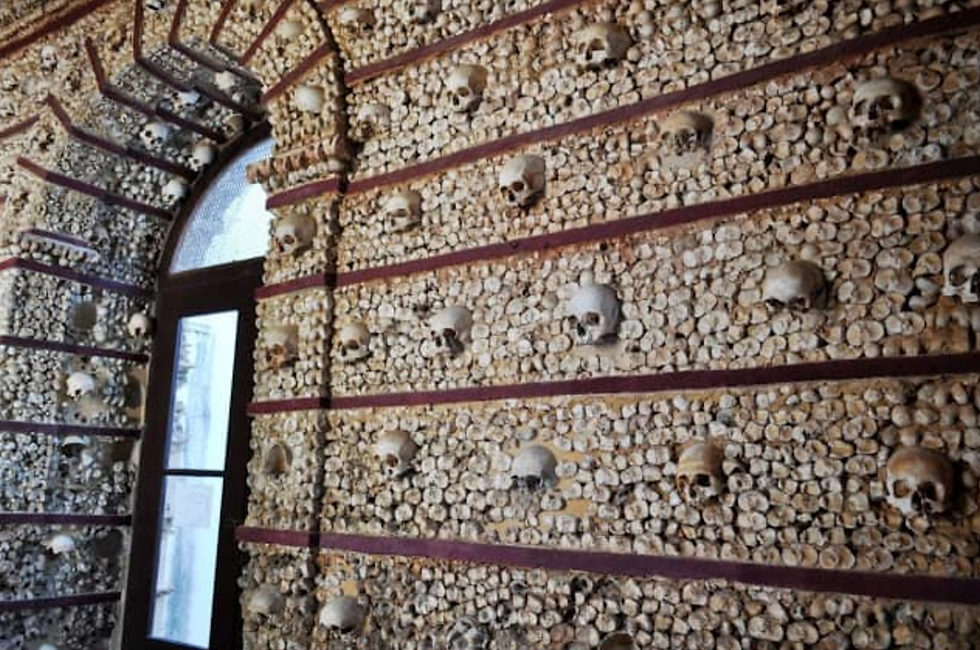
The Chapel of Bones in Faro is a small and impressive ossuary, located in the back garden of the magnificent Carmo Church. The walls and ceiling of the chapel are entirely covered with the bones and skulls of more than 1,000 Carmelite monks, arranged in a geometric pattern.
Visitor Information
Location: Access is through the Carmo Church, at Largo do Carmo 21, 8000-148 Faro, Portugal.
Visiting Hours: The chapel follows the church's schedule, generally closing during lunchtime and on Sundays for tourism.
Monday to Friday: 10:00 to 13:00 and 15:00 to 17:30.
Saturday: 10:00 to 13:00 (closed in the afternoon).
Sunday: Closed to visitors (open only for religious services).
Entrance Fee: The combined ticket for the church and chapel costs approximately €2.00 per person (it is recommended to bring cash).
Contact: You can contact the church office at +351 289 824 490.
Historical Context and Interesting Facts
The Chapel of Bones was inaugurated in 1816. It was built at a time when the city's cemeteries were overcrowded. The bones of Carmelite monks were exhumed and used to decorate the chapel, serving as a powerful memento mori — a visual reminder of the transience of human life.
The Inscription: Above the entrance door, the phrase reads: "Come here and consider that you will eventually reach this state." This message invites visitors to reflect on mortality.
Architecture: Despite the somber theme, the arrangement of the femurs and skulls is done with an almost artistic and symmetrical order, creating an atmosphere of solemnity and respect, attracting thousands of visitors every year.
Carmo Church: Be sure to visit the interior of the church itself before going to the chapel; it is considered one of the best examples of Baroque gilded woodcarving in Portugal.
The Faro Municipal Museum, founded in 1894, is one of the oldest and most important museums in the Algarve region. It is housed in the magnificent Convent of Our Lady of the Assumption (16th century), located in the heart of Vila Adentro (the historic center), a building that in itself justifies a visit due to its beautiful Renaissance cloisters.
Location: Largo Dom Afonso III 14, 8000-167 Faro, Portugal.
Opening Hours:
Tuesday to Friday: 10:00 to 18:00.
Saturday and Sunday: 10:30 to 17:00.
Closed on Mondays and public holidays.
Note: Last entry is usually 30 minutes before closing.
Entrance Price:: A standard ticket costs approximately €2.00 to €3.00. Entry is free for children and young people up to 25 years old, and free on Sundays for residents of Portugal.
Contact: +351 289 870 827 or via the Faro City Council website.
Main Highlights and Collections
The museum offers a fascinating journey through the history of ancient Ossonoba (Faro) and the Algarve:
Ocean Mosaic: A centerpiece of the museum is an impressive 3rd-century Roman mosaic depicting the god Oceanus. Discovered in 1976 near the train station, it is considered a National Treasure due to its size and state of preservation.
Roman Heritage: The museum displays a vast collection of busts (including those of Emperor Hadrian and Agrippina), tombstones, ceramics, and everyday objects that reveal the importance of Faro during the Roman Empire.
Islamic and Medieval Period: There are sections dedicated to the Moorish occupation and the subsequent Christian reconquest, with artifacts that show the cultural and defensive evolution of the city.
Painting Gallery: The museum houses sacred art from the 16th to the 19th centuries and a collection of paintings by the local artist Carlos Porfírio, who illustrated popular legends of the Algarve in oil paintings.
The Building and the Cloisters: Strolling through the Renaissance cloisters is a relaxing experience. The building is one of the best examples of 16th-century conventual architecture in Portugal, with a much-photographed interior courtyard.
It's an essential place for anyone who wants to understand Faro's historical identity before exploring the rest of the city.

⛵ Nature and Beaches: The Paradise of the Ria Formosa
The beaches of Faro are not the typical cliffs of the western Algarve. Here, the landscape is dominated by the Ria Formosa Natural Park, one of the 7 Natural Wonders of Portugal.
The Ria Formosa Natural Park is a vast coastal lagoon system and natural park located in the Algarve region of southern Portugal, encompassing the municipalities of Loulé, Faro, Olhão, Tavira, and Vila Real de Santo António. It is a wetland of international importance, known for its diverse habitats, abundant wildlife, and beautiful barrier islands.
Essential Information
The park headquarters are located at the Marim Environmental Education Centre in Olhão, which is a good starting point for visitors.
Location: 8700-225 Faro, Portugal
Opening Hours: Generally open to visitors from 9:00 am to 6:00 pm, although public access areas are usually open 24 hours a day.
Contact: You can contact the park headquarters at +351 289 700 210.
Entrance Price: There is no general entrance fee for the park itself, but some visitor centres or specific guided tours may charge a fee.
Accessibility: The park offers wheelchair-accessible entrances and parking, as well as adapted toilets in some locations.
What to See and Do
The park is a paradise for nature lovers and offers a wide range of activities, from bird watching to island hopping.
Boat and Kayak Tours: Explore the intricate lagoon system and visit barrier islands like Ilha Deserta, Ilha da Culatra, and Ilha do Farol on a guided boat or kayak tour. There are many eco-friendly options, including solar-powered boats.
Hiking and Cycling: The park offers several hiking and cycling trails, including the popular Ludo and Quinta do Lago trails, which are excellent for spotting flamingos and other wildlife.
Birdwatching: As one of the most important wetlands in Portugal, it is a key stop for migratory birds from northern and central Europe, and home to resident species such as the rare Caimão (symbol of the park).
Wildlife Observation: In addition to birds, you may also spot chameleons, fiddler crabs, and a variety of marine life.
Beaches: Relax on the expansive, pristine beaches of the barrier islands, which are accessible by ferry or boat.
For detailed information on the various aspects of the park, you can visit the official website. Natural.pt or the website VisitAlgarve.

Deserta Island, also known as Barreta Island, is one of the barrier islands in the Ria Formosa Natural Park, in Faro. It is famous for being the only island in the Algarve without permanent inhabitants and for being home to the southernmost point of mainland Portugal, Cabo de Santa Maria.
How to Get There
Access to Ilha Deserta is exclusively by sea from Faro (Cais das Portas do Mar).
Ferry (Carreira): This is the most economical option.
Duration: Approximately 45 minutes, allowing you to observe the channels of the Ria Formosa.
Price: A round-trip ticket costs approximately €10 to €15.
Operator: Animaris is the official concessionaire; online booking is recommended during the summer.
Speedboat: Ideal for those in a hurry.
Duration: Approximately 15 minutes.
Price: Higher than the ferry, but with more flexible schedules.
Sightseeing Tours: Several companies like Formosamar or Islands 4 You offer tours that combine Ilha Deserta with other islands (like Ilha do Farol).
What to Do
The island is a destination focused on tranquility and direct contact with nature.
Beach: Enjoy approximately 7 km of fine sand and crystal-clear waters. It is considered one of the cleanest and most tranquil beaches in the region.
Cape Santa Maria Trail: A wooden walkway that crosses the island, allowing visitors to observe the local fauna (such as chameleons and various birds) and flora until reaching the marker that indicates the southernmost point of Portugal.
Birdwatching: It is a privileged location to see plovers, terns and, sometimes, flamingos in the estuary channels.
Naturism: Due to its size and isolation, there are areas of the island where the practice of naturism is common and tolerated.
Where to Eat
There is only one structure on the island: the Estaminé Restaurant.
It is an eco-sustainable building that uses solar energy and water desalination.
Specializing in fresh fish, seafood from the estuary, and Algarve-style snacks.
Tip: It's essential to make reservations in advance, especially during July and August. If you prefer not to go to a restaurant, it's advisable to bring your own water and food, as there are no other shops or kiosks on the island.

A Ilha do Farol é uma das zonas mais pitorescas da Ria Formosa. Na verdade, ela não é uma ilha separada, mas sim a extremidade poente da Ilha da Culatra. O seu nome deve-se ao imponente Farol do Cabo de Santa Maria, que domina a paisagem. É conhecida pelas suas casas de veraneio coloridas, jardins bem cuidados e praias de águas cristalinas.
How to Get There
Access is exclusively by boat from Faro or Olhão.
From Faro (Cais das Portas do Mar):
Ferry: The trip takes about 30 to 40 minutes. Round-trip tickets cost approximately €5.00 to €6.00 (prices from 2026).
From Olhão (Cais da Ribeira):
Ferry: The boat usually makes a stop in Culatra before reaching the lighthouse. The total trip takes about 45 to 60 minutes. The round-trip price is around €6.50.
Water Taxi: Available 24 hours a day from Faro or Olhão. It's more expensive, but much faster (15 minutes) and more flexible with schedules.
Boat Tours: Several companies offer tours that stop at the Lighthouse, often combined with a visit to Ilha Deserta (Desert Island).
What to See and Do
The atmosphere at Farol is relaxed, ideal for families and those looking to escape the hustle and bustle of the city.
The Cape Santa Maria Lighthouse: Built in 1851, it is almost 50 meters high. Although the interior is not always open to the public, it is the island's great icon and an excellent landmark for photos.
Farol Beach: An extensive stretch of sand with a Blue Flag. The waters are calm and clear, ideal for swimming. There are areas with concessions for sun umbrellas and deck chairs.
Walk to Culatra: It's possible to walk along the sand (about 4 km) from the lighthouse to the neighboring village of Culatra. It's an excellent walk to observe nature and the local life of the fishermen.
Sunset: The Lighthouse is considered one of the best places in the Algarve to watch the sunset, whether at one of the beach bars or by the pier.
Where to Eat and Amenities
Unlike Deserta Island, Farol has a small community and several services:
Restaurants and Bars: There are several options for eating fresh fish and seafood, such as Restaurante João Farol or Associação do Farol. There are also terraces ideal for an afternoon, such as the popular Chelas.
Infrastructure: The island has public restrooms, lifeguards during the bathing season, and some small shops selling basic goods.
Tip: In the summer, the last boats returning are usually very crowded. Try to arrive at the dock a little early to guarantee your place.

Faro Beach is the most popular beach in the city and is located on the Faro Peninsula (commonly called Faro Island), one of the barriers protecting the Ria Formosa Natural Park. Unlike Deserta or Farol islands, this is the only one accessible by road, via a narrow, single-lane bridge.
How to Get There
The beach is located about 10 km from the center of Faro and very close to the airport.
By Bus: This is the most practical option. Line 16 (towards Faro Beach) departs from the bus terminal in the city center. The journey takes approximately 20-25 minutes.
By Car: Access is via the N125-10 road, following the signs for Airport/Beach. The journey takes 15 minutes, but parking in the summer is extremely difficult due to limited space.
By Boat (Ferry): During peak season (June to September), there is a ferry that departs from Faro Dock (Cais das Portas do Mar). It is the most scenic option, crossing the canals of the Ria Formosa.
On Foot/Bike: There is a boardwalk/cycle path that connects the airport area to the beach, ideal for those who enjoy exercising with a view of the estuary.
Features and Environment
Faro Beach has a vibrant atmosphere and is frequented by both locals and tourists.
Length: The beach is approximately 9 km long with golden sand. The central area, next to the bridge, is the busiest and most urbanized. If you walk towards the ends (East or West), you will find much quieter and more deserted areas.
Duality of Ria and Sea: On one side of the road is the Atlantic Ocean (with waves ideal for surfing) and on the other are the calm waters of the Ria Formosa, perfect for bird watching or practicing tranquil water sports.
Infrastructure: It has lifeguards (during the bathing season), public restrooms, showers, and rental of awnings and sun loungers.
What to Do and Where to Eat
Water sports: There are several surf schools and kayak and stand-up paddleboard (SUP) rental centers along the estuary.
Restaurants and Bars: The selection is vast and caters to all budgets.
Zé Maria: Famous for its grilled fish and seafood rice.
Elements: Mediterranean cuisine with a privileged view of the sunset.
Wax Restobar: A popular spot for a cocktail or light meal with a young atmosphere.
Paquete: Known for its traditional Algarve dishes.
Tip: If you're visiting in the summer and driving, try to arrive before 10:00 AM. Otherwise, the bus or boat are much less stressful options.

🍴 Gastronomy: Flavors of the Ria
In Faro, fish and seafood are the stars. Don't leave the city without trying them!
Seafood Cataplana: The iconic dish of the Algarve, cooked in a copper pot that preserves all the flavor.
Clam Rice: A creamy rice dish made with a mollusk typical of the region.
Regional Sweets: Try Dom Rodrigo (egg and almond threads) or any sweet made with carob, the "black gold" of the Algarve.
Where to eat: Restaurants like Tertúlia Algarvia (Vila Adentro) and Estaminé (on Ilha Deserta) are known for their quality.
📅 When to go and Practical Tips
Best Time to Visit: From May to September to enjoy the beaches. If you want to avoid the crowds and high prices, the months of April, May, and October are perfect: mild weather and a quieter city.
Transportation: The city center is very compact and easy to walk around. To reach the islands, use the public ferries that depart from Porta Nova Pier (cheaper than private boats).

Comments